PM Rank #62: Liu Qiangdong — From a $1,500 Electronics Counter to JD.com's 211 Same-Day Logistics Empire
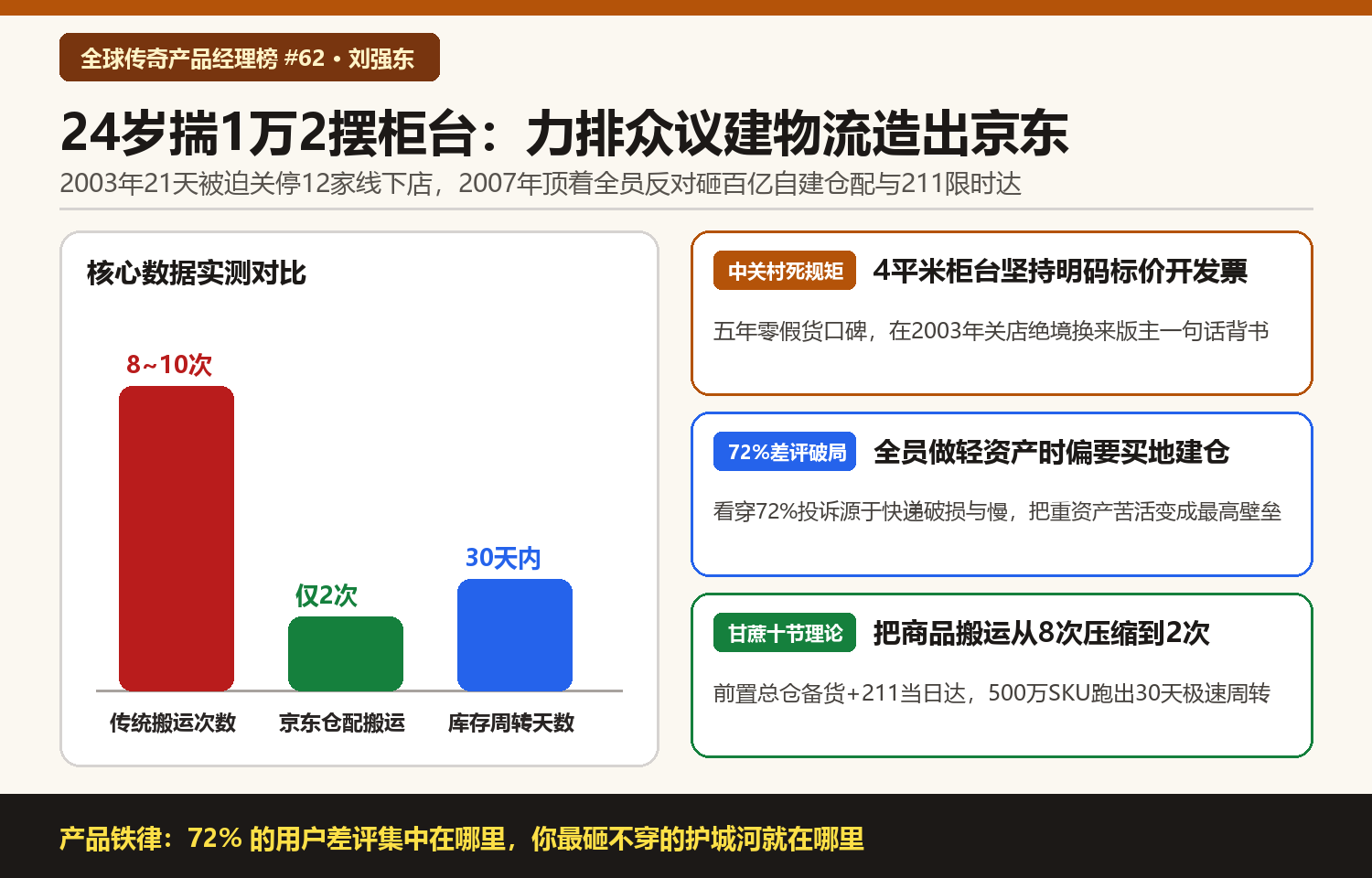
On June 18, 1998, a 24-year-old graduate took 12,000 RMB saved from coding and hand-copying letters to rent a 4-square-meter counter in Beijing’s Zhongguancun electronics market. In a market notorious for price gouging and refurbished knockoffs, he enforced an unheard-of rule: fixed transparent price tags, zero haggling, and an official tax receipt for every single CD-ROM sold.
At #62 on our Legendary Product Managers & Builders list, we examine Liu Qiangdong and the two product-operations bets that turned a shuttered offline counter into JD.com.
1. Closing 12 Stores in 21 Days: How Five Years of Receipts Saved the Company
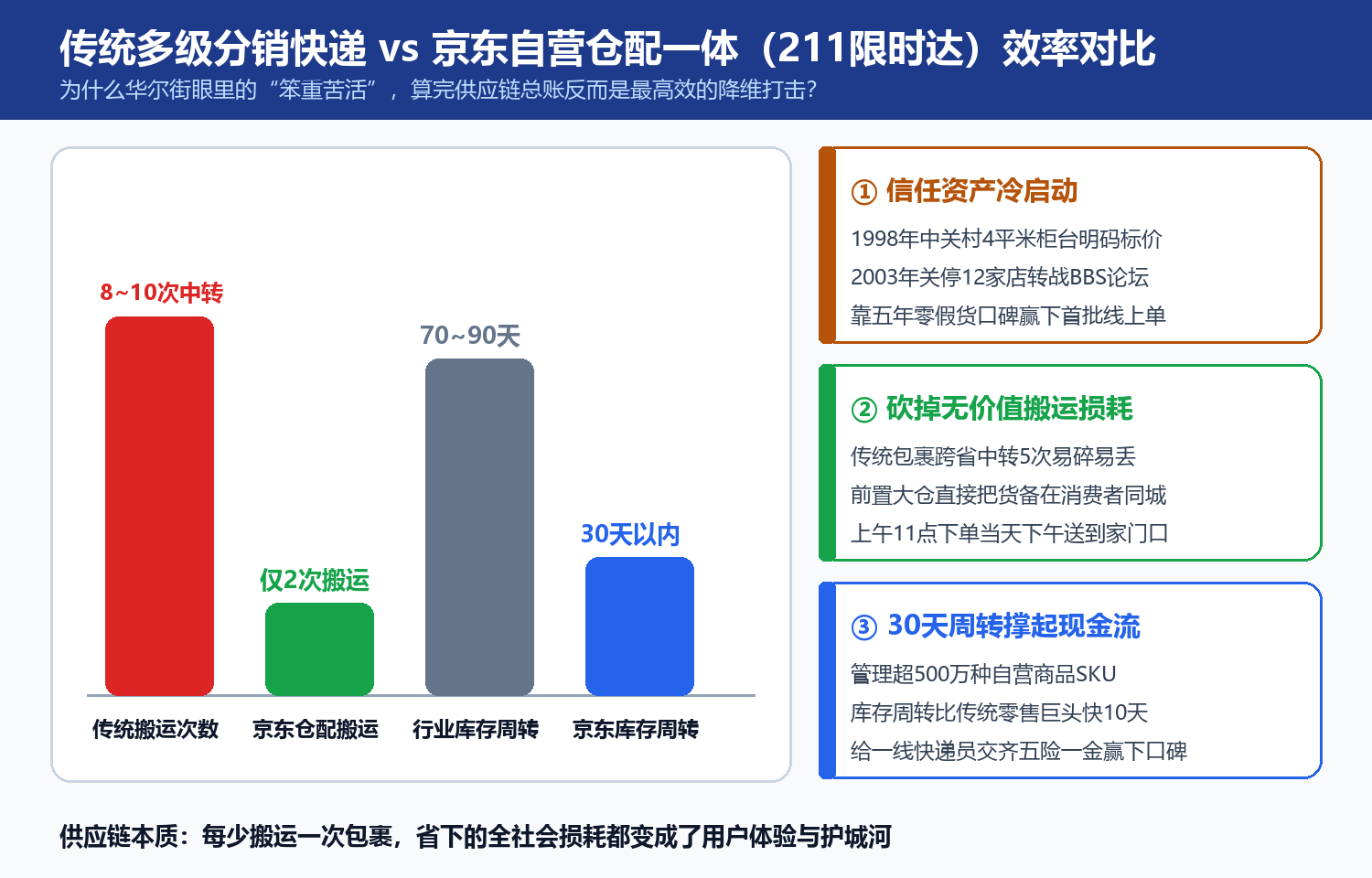
By spring 2003, his business had grown to 12 retail counters. When the SARS outbreak emptied Beijing’s streets overnight, he made the painful call to shut down all 12 physical stores within 21 days and move his team onto online BBS forums. Nobody trusted wire transfers to strangers online—until the chief moderator of CDBest vouched for him: “I know Jingdong; in five years at Zhongguancun they have never sold a single fake disc.” Those five years of paper receipts became JD’s cold-start trust engine.
2. The 2007 Boardroom Revolt: Why Build Heavy Warehouses When Everyone Wanted Asset-Light?
In 2007, auditing every customer complaint revealed that 72% of all dissatisfaction came from third-party couriers—broken LCD monitors, week-long delays, and lost electronics. Defying investors who insisted e-commerce must remain asset-light, Liu raised $1B+ to build regional fulfillment centers and hire full-time uniformed couriers with full social insurance.
By placing inventory inside regional warehouses within 50 km of customers, JD reduced the number of times a product is physically handled from 8–10 hops down to just 2 hops, launching the iconic 211 Same-Day Delivery (order by 11 AM, delivered same day; order by 11 PM, delivered by 3 PM next day) while keeping inventory turnover around 30 days across millions of SKUs.
Discussion