Failed 6 Startups in a Row and Forced to Sell His First Hit: How He Won China's $100B Food Delivery War
Late one night in October 2006, inside a cramped apartment in Beijing’s Wudaokou district, a group of twenty-something engineers sat in silence around a chipped wooden table.
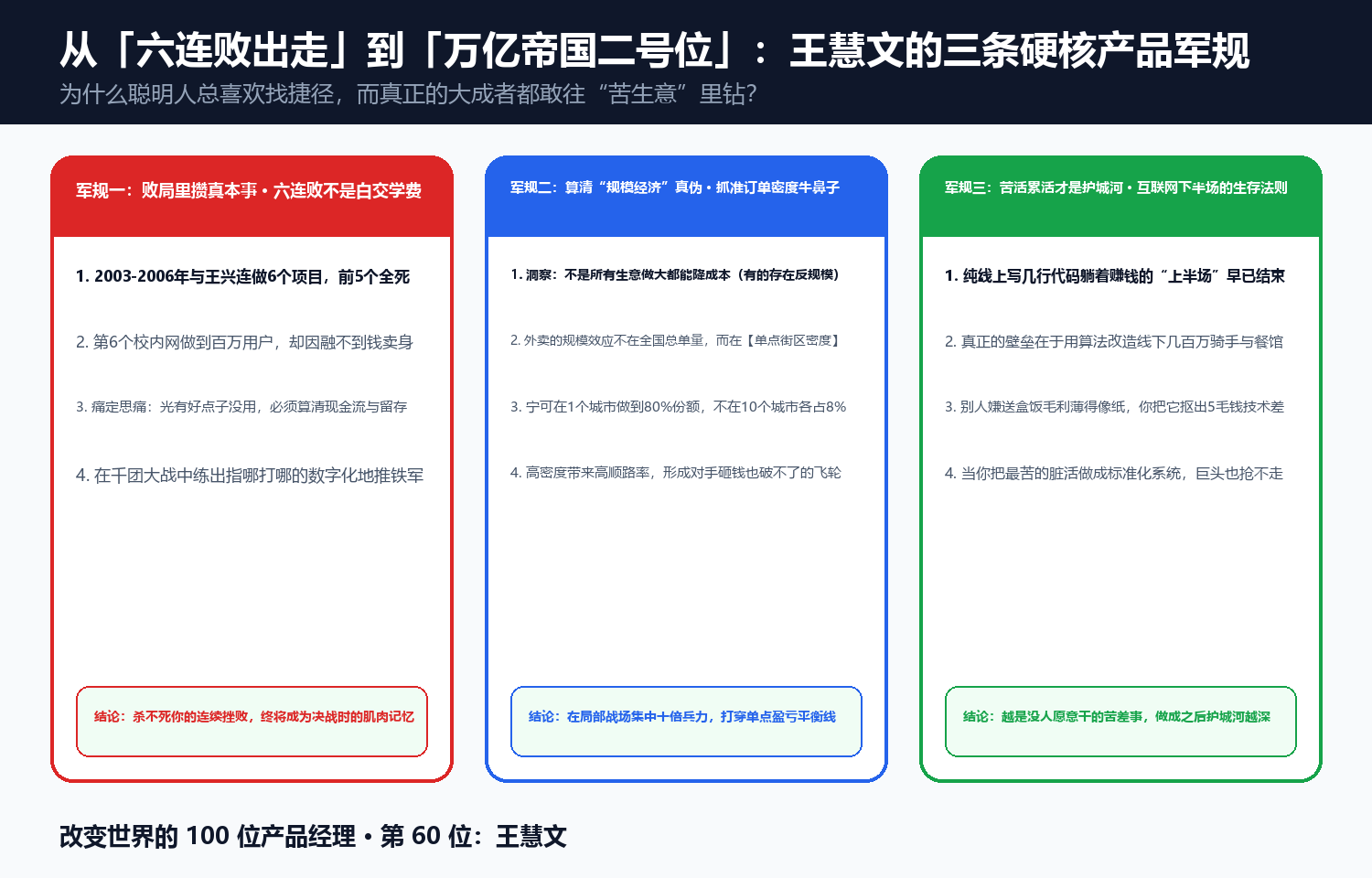
They had just signed the papers selling Xiaonei—the college social network they had poured their souls into—for $2 million because they could no longer afford server bandwidth. It was their sixth startup attempt in three years after dropping out of graduate school. The first five had died outright; the sixth had to be sold right before dawn.
Seven years later, co-founder Wang Huiwen (#60 on our 100 Product Managers Who Changed the World ranking) stepped into an arena everyone thought was already over: on-demand food delivery.
1. Entering Five Years Late Against Giants
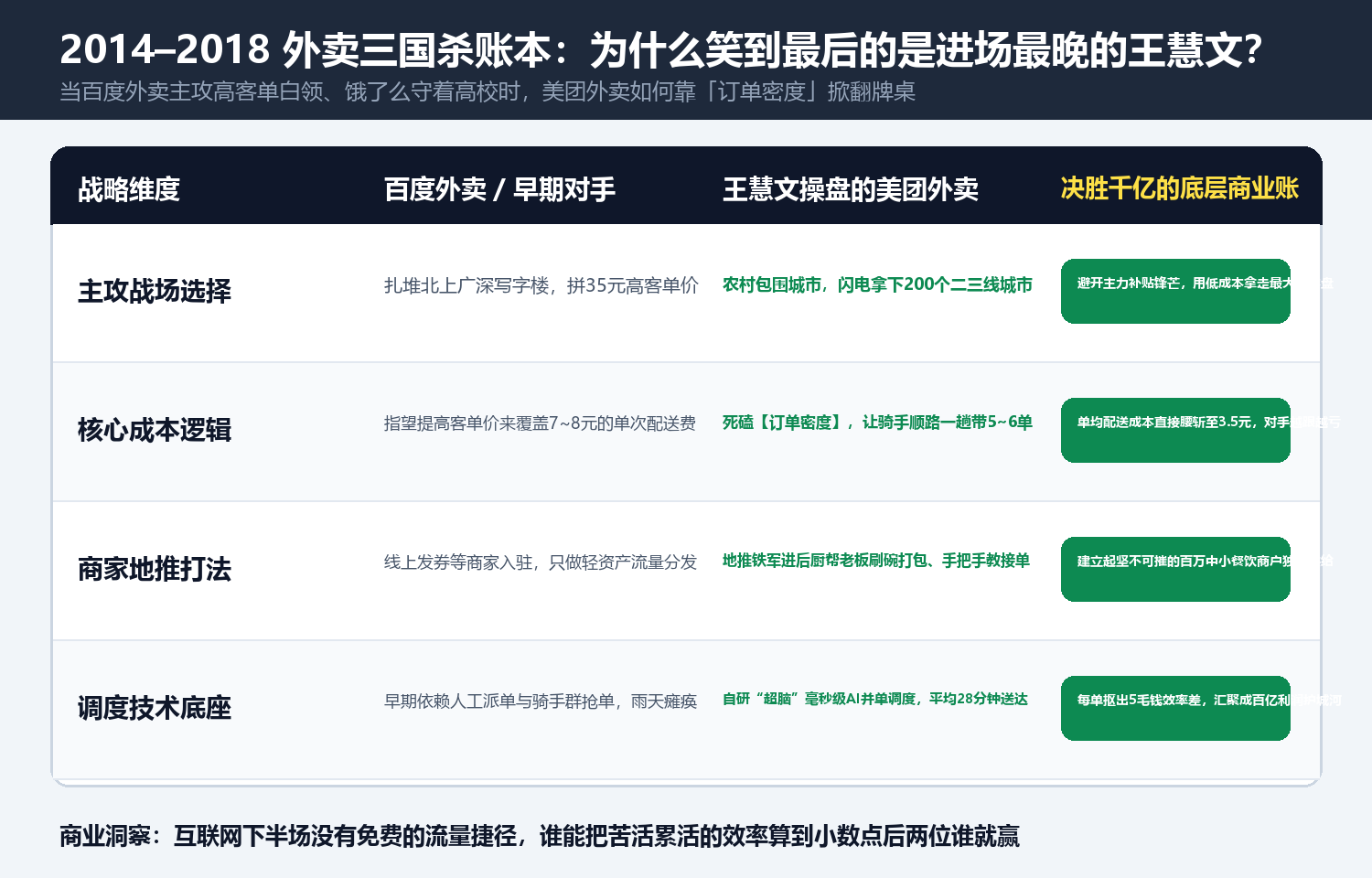
By late 2013, Ele.me had already dominated university campuses for five years, and Baidu was pouring billions into white-collar lunch delivery. Delivering a $2 lunchbox within 35 minutes cost $1 in rider labor alone—a brutal unit-economics trap.
2. Winning on Order Density in 200 Lower-Tier Cities
Instead of burning cash head-on in Beijing and Shanghai, Wang Huiwen sent 2,000 ground sales reps into 200 second- and third-tier cities. He realized food delivery is not about high ticket sizes—it is about order density per square kilometer. When one rider picks up six meals from the same street and delivers them to the same residential block, delivery cost per order drops by half.
3. Building the “Superbrain” Real-Time Dispatch Engine
To scale past millions of daily orders, Wang Huiwen spearheaded Meituan’s real-time AI dispatch system, calculating hundreds of millions of route permutations in milliseconds to compress average delivery time to 28 minutes and capture over 65% of the market.
Discussion